What We Need To Know About Implants And Crowns
16 December 2022
What Is A Dental Implant And When To Use It?
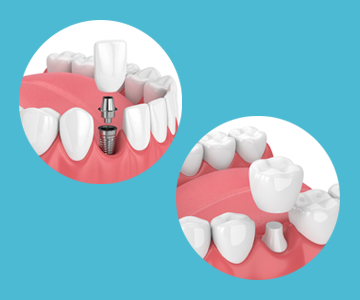
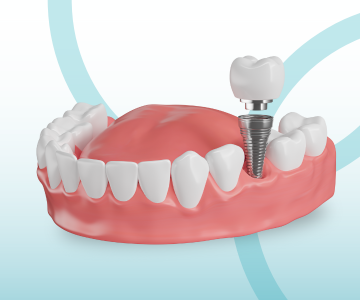
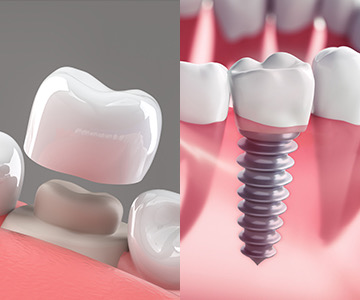
Dental implantation is the most modern and widespread method of treatment of toothlessness (medical term - adentia). During a dental implantation, the patient is completely missing a tooth, which means there is no root in the jawbone. The procedure of dental implantation involves placing an artificial root, i.e. a metal implant, in the bone. An artificial tooth (crown) is then fixed on the metal implant. In modern dentistry, there are many alternative methods of filling the space left after tooth extraction, but implantation remains the most optimal option for patients, because the implant and the artificial tooth placed on it (crown) look very similar to the natural tooth. After the dental implants are attached to the place of the missing tooth, the difference between it and natural teeth becomes invisible to the eye.
A modern style implant is made of three components:
- An artificial titanium root that integrates into the bone;
- An implant abutment connecting the artificial crown to the titanium artificial root;
- An artificial implant crown that visually resembles a natural tooth.
Replacing a missing tooth with an implant plays an important role in maintaining the general health and hygiene of the oral cavity, because implants along with the visual effect improve the function of the maxillofacial system and prevent the accumulation of food residues in the place of the "missing tooth".
What is an artificial dental crown and when to use it?
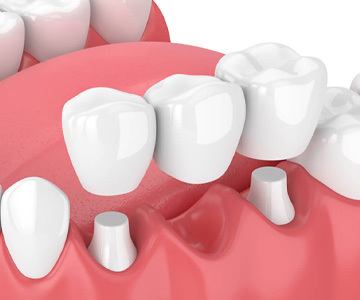
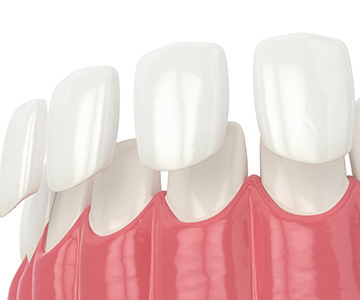
An artificial tooth crown is used when only the crown of the patient's tooth is damaged and the root in the jaw bone is solid. In the majority of clinical cases, it is impossible to restore the shape of the upper part of the tooth (the crown above the gum) with an inlay or insert, and that is why it is necessary to completely replace it. Artificial tooth crowns restore the function of the chewing apparatus.
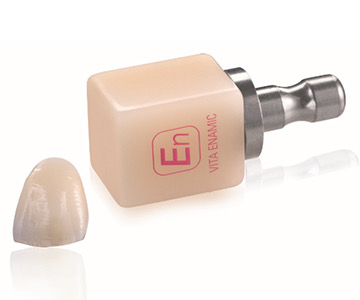
Modern artificial crowns are made of different materials. During the consultation, the patient and the dentist choose the material from which the artificial crown should be made. At this time, factors such as the patient's natural tooth color and enamel structure are taken into account. Professionally made and precisely adjusted to the patient's oral cavity, the artificial crown is distinguished by its durability. It performs its function for many years, however, the maintenance of the initial effect and the condition of the artificial crowns depends on how the patient maintains oral hygiene. In order to maintain oral health and your artificial crowns to last as long as possible, it is necessary to visit the dentist at least once every 6 months and follow his advice.
When should we consult a dentist?
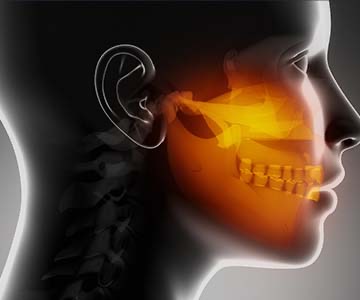
When the teeth in the mouth are firmly placed next to each other, and the empty space between them is minimal, they do not move and are therefore protected from movement and other types of injuries. When a patient loses a tooth, this strength is broken and oral health is at risk. Along with this, a missing tooth can also change your facial features. The space formed at the place of the missing tooth interferes with the normal process of chewing. The patient chews food only on the side where there is no missing tooth. Therefore, the muscles of only one side of the face are stimulated. All this changes the features of the face and makes the face asymmetrical. If you are suffering from adentia (toothlessness), it is important to consult a professional as soon as possible. The dentist will help you to maintain a healthy oral cavity and a charming smile.
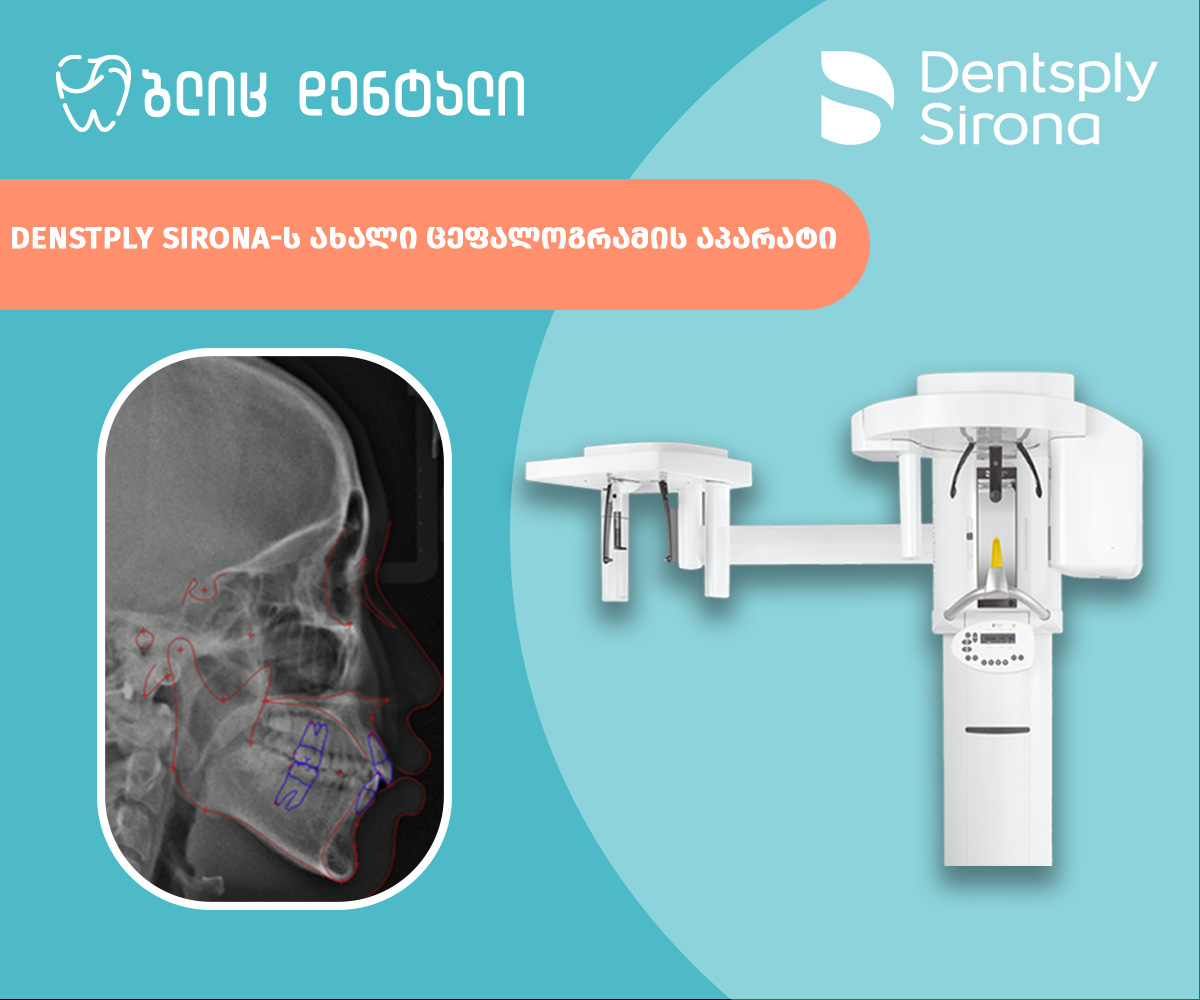
"Blits Dental - Kakhaber Kharebava Dental Clinic" is currently the only clinic in Georgia that is a strategic partner of Dentsply Sirona. Dentsply Sirona is one of the most trusted manufacturers of professional dental equipment in the world. Blits Dental - Kakhaber Kharebava dental clinic and laboratory is equipped with equipment and treatment materials produced by Dentsply Sirona, therefore our dental clinic has a technological advantage compared to other alternatives on the market.
In our clinic, you will find a calm, comfortable environment and a team of professionals who will help you solve all problems related to the oral cavity.
To get the other detailed information, sign up for a consultation or call us at: (+995) 32 222 15 16