Gum plastic surgery
12 January 2022
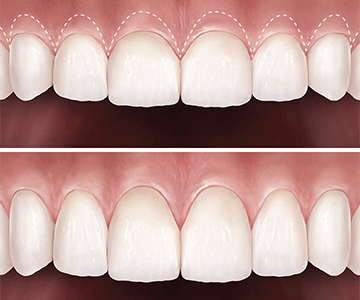
The healthy shape and color of the gums are an integral part of a charming smile and it has a great importance in aesthetic dentistry. There are often cases when the gums around the teeth are of unequal shape or height and because of this the teeth appear in different sizes. At this time the harmony of the patient's mouth is disturbed and the smile is quite unaesthetic.
In case the patient's gums are overly covered or insufficiently cover the tooth, dentists mostly recommend changing the shape of the gums, surgically. Gum plastic surgery is a less invasive surgery that gives the patient the desired aesthetic result. In addition to the visual effect, the impact of gum shape, on the general health of the gums and teeth is no less important - the right gum shape protects the tooth from environmental factors and vice versa - in the wrong position, the risk of tooth decay increases.
When a patient has unevenly sized gums, excess mass is removed by using local anesthesia. When changing the contour, the surgeon-dentist can use both laser and resection (complete or partial incision of the diseased tissue, using a surgical scalpel). The postoperative period lasts several weeks, the patient is obliged to follow the recommendations given by the dentist, in case of proper treatment the rehabilitation process is painless and the patient does not complain of severe pain.
There are many cases when the main problem of the patient is not the excess of gingival tissues, but their disappearance. The process of recession of the gums involves the gradual rising of the gums and the expulsion of the root. Gum tissue no longer covers the root, which visually makes the tooth longer and unaesthetic. Gum recession is a fairly common disease in both young and middle-aged patients. The process progresses slowly and painlessly. The causes of gingival recession are quite varied and are basically individual to any patient. In most cases, the causes of gum recession are:
- Periodontal diseases (periodontitis)
- Genetics - Some people have genetically thin gums, such gums are prone to recessions
- Removable prosthetic braces can cause trauma and recession.
- There are natural stitches on the lips, sometimes genetically stuck to the teeth so that when talking and eating, they are constantly squeezing the gum tissue, which provokes a recession.
- Smoking and any kind of tobacco.
- Rough, intense and forceful grinding of teeth.
- Poor oral hygiene and accumulated bacterial plaque (dental plaque)
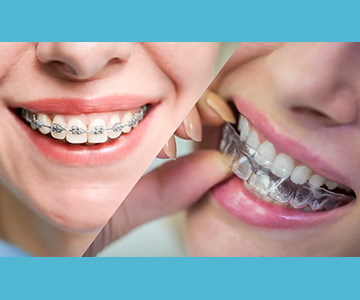
- Gum recession is also common in patients receiving orthodontic treatment (braces)
As for the symptoms of gingival recession, first of all, for the patient it is an aesthetic discomfort - due to the rising of the gums (falling down the lower jaw) the root of the tooth appears in the mouth, so the tooth is visually elongated. In addition, the tooth root is visible - normally the gums completely cover the tooth root and only the crowns of the teeth are visible in the oral cavity, however, during recession this norm is violated and the tooth root can be seen freely. The patient is also uncomfortable with hypersensitivity - if the root of the tooth is not covered by the gums, hypersensitivity is observed, mainly when the patient drinks a cold drink. Patients with gingival recession are at increased risk for caries because when the gingival recession develops and the tooth root is no longer covered by the gum, it is easily accessible to bacteria, which in itself implies the possibility of cavities (caries) forming on the root.
Treatment of gingival recession depends on how high the degree of gingival recession is. Anatomically the gum does not grow back, although it is possible to mobilize the gum tissue and cover the tooth root with micro-surgical intervention. To achieve a harmonious effect with the patient's mouth and facial areas, the most tried and tested method is to apply mathematical principles, which include prescribing biological boundaries on the principle of 'golden section' of crowns and gums in patients with disturbed aesthetics and following these boundaries during surgery.