Modern Types of Braces – Clear Aligners or Metal Braces, Which Is the Best Choice?
12 September 2025
The Importance of Orthodontic Treatment
Modern dentistry increasingly emphasizes the importance of orthodontic care. Proper teeth alignment is not only a matter of beauty and aesthetics—it directly affects chewing function, jaw joint performance, speech, and overall health.
When teeth are misaligned, chewing efficiency is often compromised. This results in insufficient food breakdown, which in turn affects the digestive system. Moreover, crooked teeth are harder to clean, increasing the risk of cavities and gum disease. Therefore, orthodontic treatment is not merely an aesthetic procedure but also a vital investment in general health.
In recent decades, orthodontics has made rapid progress. Alongside traditional metal braces, ceramic systems and an entirely new alternative—clear aligners—have emerged. This variety allows patients to choose the treatment that best suits their needs, lifestyle, and aesthetic expectations.
Metal Braces
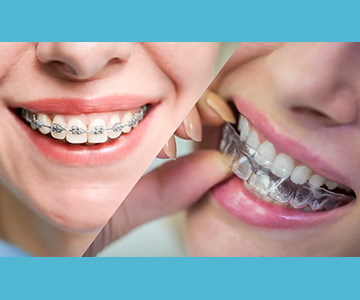
Metal braces have been the primary tool of orthodontics for decades. Made of high-quality metal, they are highly durable. Their biggest advantage lies in their effectiveness in complex cases.
The metal structure continuously applies pressure to the teeth, gradually moving them into the correct position. This is why doctors often recommend them for serious orthodontic problems.
Metal braces are especially popular among teenagers, partly due to colorful elastics that can be changed at each visit, making the process more fun. For many young patients, braces are not only treatment but also a fashion statement.
However, there are some limitations. Metal braces are clearly visible when smiling, which may cause discomfort for some patients. Additionally, the metal parts can irritate the oral tissues, and maintaining proper hygiene requires extra effort.
Ceramic Braces – An Aesthetic Alternative
In recent years, ceramic braces have become a popular alternative to metal ones. Made from materials close to the natural color of teeth, they are less noticeable and more aesthetically pleasing.
For adult patients, ceramic braces are often the first choice, as they allow discreet treatment without causing embarrassment at work or in daily communication.
Their main advantage is aesthetic appeal. However, in more complex orthodontic cases, metal braces tend to work faster and more effectively. Therefore, ceramic braces are most suitable for patients requiring moderate corrections and who prioritize aesthetics.
Clear Aligners – An Innovation in Orthodontics
One of the greatest orthodontic innovations of the past decade is the clear aligner system. These are custom-made, removable plastic trays that gradually shift teeth into the desired position.
The main advantages of aligners are comfort and aesthetics. They are virtually invisible and do not cause inconvenience during treatment. They can be removed when eating or brushing teeth, making hygiene much easier.
Nevertheless, aligners require a high level of responsibility. For maximum effectiveness, they must be worn for at least 20–22 hours per day. Otherwise, the treatment process slows down, and results may be compromised.
Which Option Is Best?
Choosing between braces and aligners is always individual—there is no universal answer.
For patients with severe orthodontic issues, doctors generally recommend metal braces as the most reliable and effective option.
For mild to moderate cases, where aesthetics are a priority, ceramic braces or clear aligners may be the best solutions.
The choice also depends on age, lifestyle, and financial capacity.
Conclusion – Individualized Approach Is the Key to Success
The decision should not be based solely on appearance. Treatment must always be planned in consultation with a professional orthodontist.
At Blits Dental – Kakhaber Kharebava’s Clinic, each orthodontic case is managed with modern technologies and experienced specialists. Every condition is created for a professional, safe, and individually tailored treatment process.
Our goal is to provide every patient with a solution that ensures both medical effectiveness and alignment with lifestyle and aesthetic expectations. That’s why orthodontic treatment at Blits Dental is an investment not only in health but also in a confident smile.