Is In-Office Teeth Whitening Safe?
02 September 2026
A white and bright smile is the main goal of teeth whitening, one of the most sought-after aesthetic dental procedures today. However, along with the desire for a brighter smile, a common question often arises: Is in-office (chemical) teeth whitening safe, and to what extent can it affect tooth enamel?
Teeth whitening, when performed using the appropriate method and following a dentist’s recommendations, is generally considered a safe aesthetic procedure. However, it is important to understand that not all whitening methods are the same. The safety of the procedure depends on the whitening agent used, its concentration, application time, and the patient’s oral health.
What Does Chemical Teeth Whitening Mean?
Chemical teeth whitening involves the use of specialized whitening agents, primarily hydrogen peroxide or carbamide peroxide. These substances break down accumulated dark pigments within the tooth tissue, making the teeth appear visibly whiter without damaging the enamel.
It is important to note that whitening does not alter the natural structure of the tooth. However, improperly used or excessively concentrated whitening agents may cause tooth sensitivity or gum irritation.
What Should You Know Before Teeth Whitening?
Before undergoing teeth whitening, it is important to consult a dentist to assess the condition of your teeth and gums. Several factors can help ensure the desired result is achieved safely and without complications.
1. Complete Oral Sanitation Is Essential
Before whitening, the oral cavity should be completely healthy.
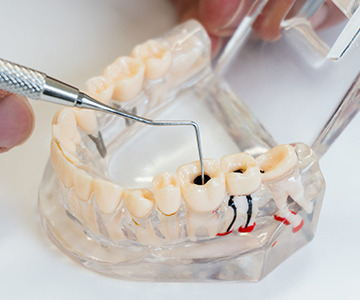
Cavities: If a tooth has decay, whitening gel may penetrate into the deeper layers of the dentin and reach the nerve, potentially causing severe pain or inflammation (pulpitis).
Gum health: If the gums are inflamed or bleeding, whitening gel may cause further irritation.
2. Professional Cleaning — The First Step
Two to three days before whitening (or immediately before the procedure), professional teeth cleaning using ultrasonic scaling and an AirFlow device is recommended.
If there is calculus or soft plaque on the teeth, the whitening gel may not be distributed evenly across the surface, which can result in uneven or “patchy” whitening.
3. The “White Diet” — Maintaining the Results
For at least 1–2 weeks after the procedure, following what is commonly known as a “white diet” is recommended.
During this period, teeth may be more susceptible to absorbing pigments. It is therefore recommended to avoid coffee and tea, red wine, chocolate, dark-colored sauces such as tomato and soy sauce, colored soft drinks, and berries.
Smoking should also be strictly avoided.
4. Results Are Individual
The maximum whitening potential of teeth depends partly on genetics. Some patients may achieve a change of up to 8 shades, while others may see an improvement of only 2–3 shades.
Before treatment, the dentist determines your initial tooth shade using a special shade guide and explains in detail what results can realistically be expected.
In-Office Whitening or At-Home Whitening with Trays?
When choosing a teeth whitening method, patients often ask which option is better: in-office whitening or at-home whitening with trays?
In reality, both methods have their own advantages. The choice depends on the patient’s dental condition, desired result, sensitivity, and how much time they can dedicate to the procedure.
In-Office Teeth Whitening
In-office teeth whitening is performed at a dental clinic under the supervision of a dentist. One of the main advantages of this method is its relatively short treatment time and the fact that the entire procedure is performed in a controlled clinical environment.
Before the whitening procedure, the dentist evaluates the condition of the teeth and gums, performs professional cleaning if necessary, and selects the appropriate whitening system.
During the procedure, a specialized whitening gel is applied to the surface of the teeth. Depending on the system used, a specialized light source may also be applied.
This option is particularly convenient for patients who want fast and noticeable results and do not want to wear whitening trays every day for several weeks.
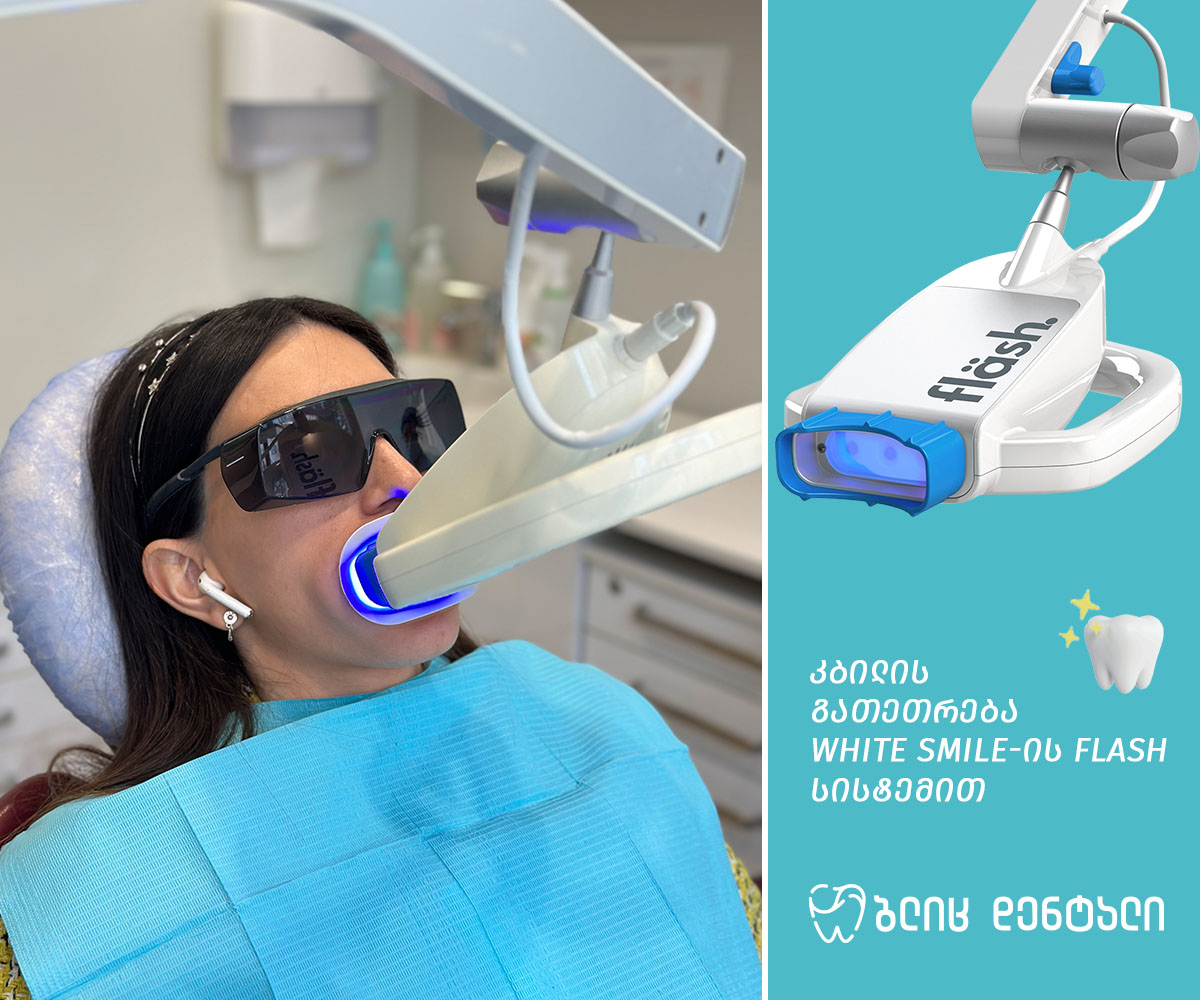
At Blits Dental, in-office whitening is performed using the German WHITEsmile fläsh innovative whitening system. The system uses a specialized LED light and optimized whitening gel designed to minimize the risk of enamel damage and excessive heating.
This innovative technology acts as a catalyst, accelerating the release of oxygen molecules and helping remove deeply embedded dark pigments accumulated over the years in just 45–60 minutes.
Mild sensitivity after the procedure is completely normal and usually disappears on its own within 24–48 hours, while the results can be maintained for a long time with proper care.
At-Home Teeth Whitening with Trays
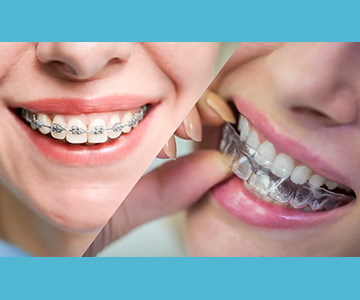
At-home teeth whitening with trays is a more gradual method. In this case, the patient uses individually selected or custom-made trays along with a whitening gel, following the dentist’s instructions.
The trays are worn for a specific period of time, allowing the tooth shade to gradually change. One of the main advantages of this method is that the patient can perform the treatment at home at a time that is convenient for them.
However, it is important that both the trays and whitening product are selected based on a dentist’s recommendation. Using too much gel or wearing the trays for longer than recommended may increase the risk of tooth sensitivity and gum irritation.
Which Method Should You Choose?
If the main priority is fast results, in-office whitening is often the more convenient choice.
If the patient prefers to whiten their teeth gradually, at home, and according to their own schedule, at-home whitening with trays may be a more suitable option.
In some cases, a dentist may also recommend combining both methods — for example, using at-home whitening trays after in-office whitening to help maintain the results.
It is important to understand that there is no universally “better” whitening method. The right choice depends on the patient’s dental condition, sensitivity, oral health, and desired outcome.
Therefore, before teeth whitening, whether using an in-office system or at-home trays, a consultation with a dentist is recommended. A professional assessment makes it possible to select a method tailored to the patient’s individual needs and achieve the safest, most effective, and most predictable result.
How Should You Care for Your Teeth After Whitening?
This is one of the most important questions, as daily care plays a major role in maintaining the results.
After whitening, good oral hygiene and following your dentist’s recommendations are especially important.
It is recommended to:
- Brush your teeth regularly and correctly;
- Clean between your teeth;
- Use the toothpaste recommended by your dentist;
- Limit tobacco and foods and beverages that can stain the teeth;
- Have regular professional cleanings;
- Maintain regular dental check-ups.
If you experience tooth sensitivity after whitening, your dentist may recommend special products to help reduce it.
Teeth Whitening Prices
The cost of teeth whitening in Georgia varies depending on the method selected and the technology used.
When planning the final treatment budget, it is also important to consider any additional necessary procedures, such as professional dental cleaning (ultrasonic scaling + AirFlow) and complete oral sanitation, which help ensure a safe and effective whitening procedure.
At Blits Dental, our qualified dentists will provide you with a professional consultation, answer all your questions in detail, and help you create a personalized treatment plan.