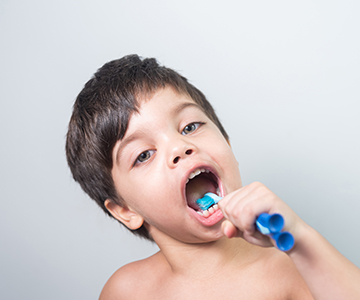
How To Get Children Used To Oral Hygiene?
07 July 2022
Children's Oral Cavity And Its Specifics
Routine habits are part of our character when it comes to a healthy mouth. Beautiful, healthy teeth and gums are the result of proper hygiene habits that come from early childhood. Before we talk about how to form the right routine for little ones, it’s important to know about the development of a child's oral cavity. There is a scale according to which both dentists and pediatricians are guided. According to this scale, the first tooth is cut on the lower jaw at the age of 6-8 months. It is very important to remember that despite the existence of a standard scale, every human body is individual and it does not follow any specific schedule. If a child has his first tooth at the age of 4 months, it means that he will replace the teeth sooner than the others and the permanent teeth will grow sooner. Similarly, if the first tooth falls out at the age of one year, the process of tooth replacement may be delayed and the child may have his teeth replaced at the age of 6 and if the child lost the first tooth later than 1 year, he may complete the tooth replacement even at the age of 7 or 8.
When Should We Start Taking Care Of Oral Hygiene?
Oral hygiene should be started at an early stage of a child's development. By this time there is already enough of a hard tissue in the mouth that should serve the baby for at least 6 years. There are special mouth cleaning silicones, age-appropriate brushes that are recommended for children from six months to 3 years. The brushes for ages 0-3 are very gentle and easy for children to use. It does not damage the gums, which is especially important while the little one is still getting used to the daily process of brushing his teeth.
Too often parents think that children should brush their teeth on their own, something they can not do until they are 7 years old. It is at the age of seven that children develop manual habits. The simplest manual habit is to tie a string. Until the child is able to tie, write and draw independently, he is not ready to take care of his own oral hygiene. Of course, this does not mean that we should not motivate them. Obviously the child has to brush his teeth himself, but we have to follow this process and take part in it.
How To Teach Children Oral Hygiene?
In order for your children to fall in love with the teeth cleaning routine and maintain healthy teeth, "Blits Dental - Kakhaber Kharebava Clinic" recommends:
- Teach your child about daily oral hygiene, even from the age before the teeth are cut. This will prevent them from caries in the future. Cleaning the mouth after each meal with even just water, will prevent the growth of unwanted bacteria.
- Use a toothbrush suitable for your child's age. It is possible to choose both silicone and gentle brush.
- Make teeth cleaning routine fun, make it all a game, and don't forget to reward your child after a well-done "homework".
- Often, the "principle of participation" helps parents to teach their child simple rules of self-care. Brush your teeth together so your child can take an example from you and better understand the need to clean their mouth.
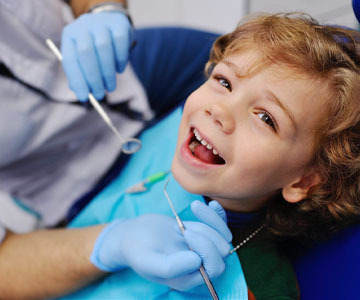
"Blits Dental - Kakhber Kharebava the best dental clinic Tbilisi '' also recommends: Get your child used to regular visits to the dentist. This way, oral care will become a natural and necessary habit, which will guarantee a charming and healthy smile.