Children`s Stomatology
20 August 2021
Parents need to know some of the important aspects of caring for a child's teeth, hygiene, early diagnosis, and prevention of diseases because the general well-being of a kid`s body depends on the health of the child's oral cavity and teeth. Before the first visit to the dentist, the child must be psychologically prepared, which will determine his attitude towards both - oral care and the dentist, so we must start preparing them before taking them to the dentist's office. Of course, choosing the right dentist is essential.
First teeth
Bottom incisors (bottom front teeth) – these are usually the first to come through, usually at around 5 to 7 months. Top incisors (top front teeth) – these tend to come through at about 6 to 8 months. Top lateral incisors (either side of the top front teeth) – these come through at around 9 to 11 months. Bottom lateral incisors erupt at the age of 11-13 months.
From 12 to 16 months, when the child needs to develop active chewing skills, stronger teeth are needed, the function of which is performed by the chewing teeth or molars.
From 16 months, the upper canines begin to erupt. These teeth, due to their massiveness, are the most difficult to erupt and takes a lot of time.
From the age of 18 months, the lower canines rise. By the age of one and a half, a child should have 16 teeth. All milk teeth completely erupt by a maximum of 2.5-3 years.
First visit to the dentist
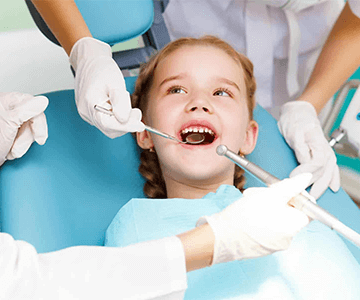
The first visit to the dentist is with the parents. At this time, parents consult with a dentist about caring for the baby's oral cavity, which should be started at the age of 6-10 months. Around the age of 1–1.5 years, the dentist examines plaque, bottle caries, or various dental abnormalities.
Oral cavity prophylaxis should be carried out for prophylactic purposes at the age of 2 to 2.5 years, and if the child allows, the teeth should be hermetically closed.
By the age of 3, babies already have 20 teeth. At this time, the dentist should examine the dentition. The sooner a problematic dentition is identified, the sooner the dentist will determine when to start correcting the dentition, and will appoint a prosthodontist consultation.
Choose the right toothpaste and brush
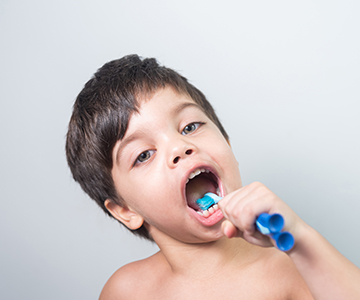
While babies do not have their first incisors and molars, oral hygiene only involves cleaning the tongue and gums, which parents should consider. At an early age, when the baby is still unable to hold a toothbrush on his own and make the necessary movement, you can use the special gauze to clean their tongue, cheeks, and gums. At the age of 1, they can already use a soft toothbrush, which should have short soft brushes and a short, comfortable handle. The best dental clinic Tbilisi.
Toothpaste should be selected according to age. For babies, who have not yet received complimentary food, using a gel-like paste with a neutral or milky flavor is best. It is important that it does not contain various abrasive substances, because its taste should only cause positive emotions for the baby.
Professional cleaning of milk teeth
Many people think that professional cleaning of children's teeth at an early age is not necessary, but this is not the case. Parents should take care of their children`s oral hygiene at 2.5 years old. Then doctors should analyze the need for professional teeth cleaning based on a complete analysis of the condition of the teeth of a particular child. It should be noted that professional teeth cleaning should be a regular procedure, carried out every 1-1.5 years.
For preventive purposes, it is recommended to visit the dentist twice a year to diagnose the oral cavity at an early age, in order to avoid any complications and easily eliminate problematic issues.